
Building a Data-Driven Organization
In today's digital business environment, data has become one of the most valuable assets for organizations. Every customer interaction, business transaction, marketing campaign and operational process generates valuable information. However, collecting data alone does not create business value. The real advantage comes from using that data to make informed decisions that improve performance and support long-term growth. We help businesses achieve this by enabling Building a Data-Driven Organization through intelligent data strategies and modern technology solutions.
A data-driven organization uses accurate and reliable information to guide business strategies instead of relying on assumptions or intuition. By leveraging business intelligence, analytics and data management practices, organizations can improve operational efficiency, enhance customer experiences and identify new growth opportunities. Building a Data-Driven Organization requires more than technology. It involves the right people, processes and governance to ensure data supports every business decision and delivers measurable business value.
Why Building a Data-Driven Organization Matters
Many businesses invest in analytics platforms and reporting tools but fail to gain meaningful insights because data is not integrated into everyday decision-making.
A successful data-driven organization aligns its data strategy with business goals. Whether improving customer satisfaction, optimizing operations, increasing revenue, or reducing costs, data should help solve specific business challenges. Organizations that use data consistently across departments can respond more quickly to market changes and make smarter strategic decisions.
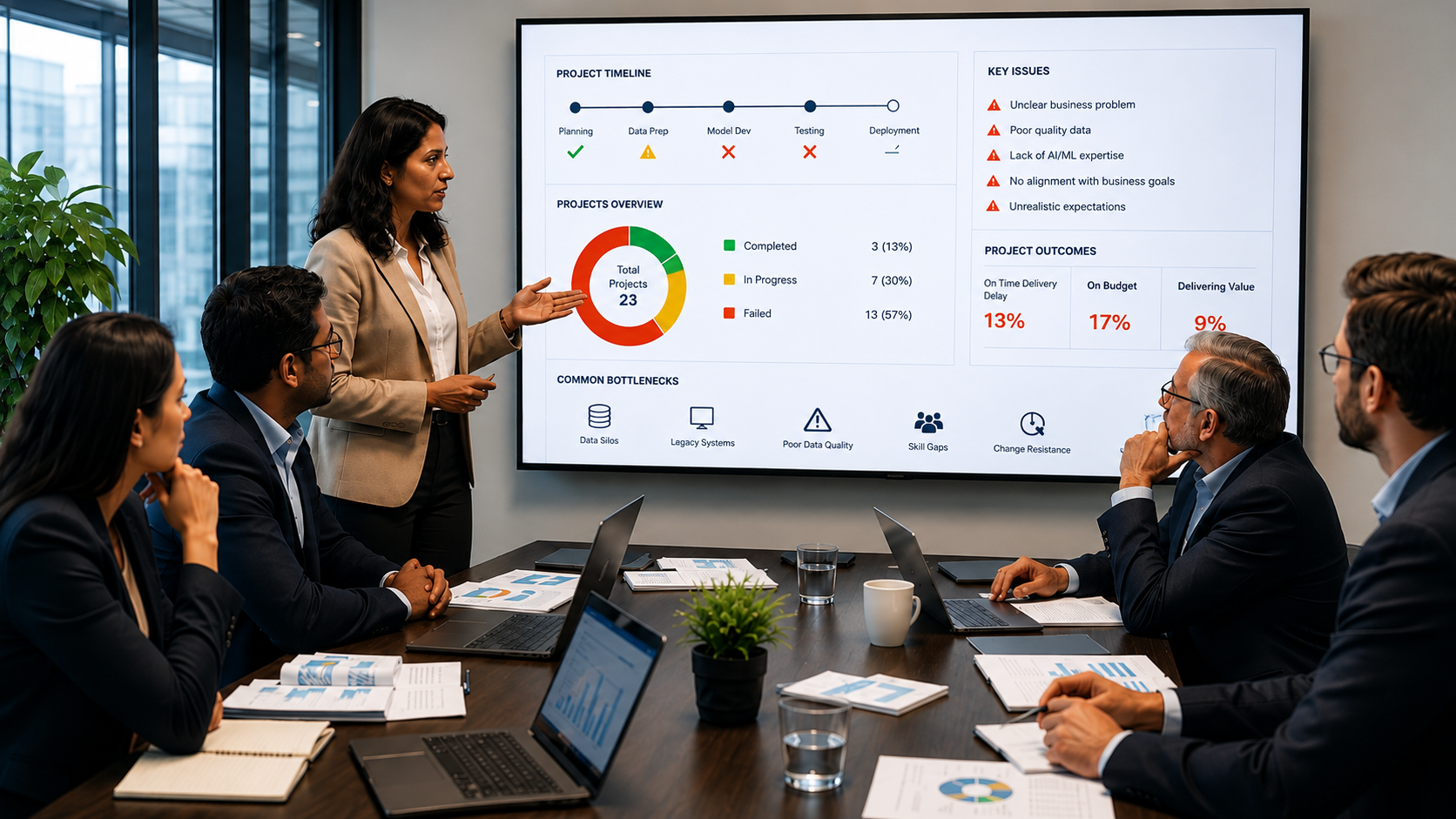
Common Challenges in Becoming Data-Driven
Despite recognizing the importance of data, many organizations face obstacles that limit their ability to use it effectively.
Poor Data Quality
Incomplete, outdated, or duplicate data can result in inaccurate reports and poor business decisions. Maintaining clean and reliable data is essential for generating meaningful insights.
Data Silos
Business information is often stored across multiple systems and departments. These disconnected data sources make it difficult to gain a complete view of business performance and customer behavior.
Limited Data Literacy
Many employees lack the skills needed to interpret reports and use analytics effectively. Without proper training, valuable business insights often remain underutilized.
Weak Data Governance
Without clear policies for data ownership, security, quality and compliance, organizations face risks related to inconsistent information and regulatory requirements.
Building a Data-Driven Strategy
Organizations should follow a structured approach to transform data into a strategic business asset.
1. Define Clear Business Goals
Every data initiative should support measurable business objectives.
Examples include:- Improving customer retention
- Increasing operational efficiency
- Optimizing marketing campaigns
- Enhancing sales performance
- Supporting strategic planning
Clearly defined goals help organizations focus on collecting and analyzing the most valuable data.
2. Improve Data Quality
Reliable decisions begin with reliable data.
Businesses should focus on:- Data accuracy
- Data consistency
- Regular data validation
- Secure data management
- Compliance with privacy regulations
High-quality data improves reporting accuracy and builds confidence in business decisions.
3. Break Down Data Silos
Organizations should integrate data across departments to create a single source of truth.
This can be achieved by:- Connecting business applications
- Centralizing business data
- Implementing business intelligence dashboards
- Encouraging collaboration between teams
Unified data enables faster analysis and better decision-making across the organization.
4. Build a Data-Driven Culture
Technology alone cannot create transformation.
Organizations should invest in:- Employee training
- Data literacy programs
- Cross-functional collaboration
- Leadership support
- Continuous learning initiatives
When employees understand and trust data, they are more likely to use it confidently in their daily work.
Best Practices for Building a Data-Driven Organization
Organizations that successfully adopt data-driven decision-making often follow these best practices:
- Align data initiatives with business objectives.
- Maintain accurate and well-governed data.
- Encourage collaboration between business and technical teams.
- Use business intelligence tools for real-time reporting.
- Continuously monitor data quality and business performance.
- Protect sensitive business information through strong security practices.
- Measure outcomes regularly and refine strategies based on insights.
A disciplined approach helps organizations maximize the value of their data investments.
Benefits of a Data-Driven Organization
Organizations that embrace data-driven decision-making gain several competitive advantages.
Better Decision-Making
Reliable insights help business leaders make informed decisions based on facts rather than assumptions.
Improved Customer Experience
Customer data enables businesses to understand preferences, personalize services and strengthen customer relationships.
Increased Operational Efficiency
Data helps identify inefficiencies, streamline workflows and optimize resource allocation.
Higher Business Growth
Analytics reveal new market opportunities, improve forecasting and support revenue growth through better strategic planning.
Reduced Business Risk
Predictive insights help organizations identify potential challenges early, allowing them to make proactive business decisions.
The Future of Data-Driven Organizations
As businesses continue their digital transformation journey, data will play an even greater role in shaping strategic decisions. Emerging technologies such as Artificial Intelligence (AI), machine learning, predictive analytics and real-time business intelligence will enable organizations to extract deeper insights and automate decision-making.
Organizations that invest in strong data foundations today will be better prepared to adapt to changing customer expectations, evolving market conditions and future technological advancements. A data-driven approach not only improves current business performance but also creates long-term resilience and innovation.
Conclusion
Building a data-driven organization is no longer optional for businesses seeking sustainable growth and competitive advantage. Organizations that focus on data quality, strong governance, employee enablement and business-aligned analytics are better positioned to make smarter decisions and improve operational performance.
Rather than viewing data as a by-product of daily operations, businesses should treat it as a strategic asset that drives innovation and measurable outcomes. With the right technology partner, organizations can unlock the full value of their data. At Solvencia, we help businesses build scalable data-driven solutions that transform information into actionable insights, enabling smarter decisions, greater efficiency and long-term business success.
Frequently Asked Questions
A data-driven organization uses reliable data and analytics to guide business decisions, improve operations and support strategic growth.
Data helps businesses understand customer behavior, optimize operations, improve decision-making, reduce costs and identify new growth opportunities.
Organizations can become data-driven by improving data quality, implementing strong governance, investing in analytics tools and building a culture that values data-based decision-making.
Key benefits include better decision-making, improved customer experiences, increased efficiency, reduced business risks and stronger long-term business growth.
-
15+
Years of Experience
-
25+
Satisfied Clients
-
100%
Project Delivery Rate
-
100+
Skilled Professionals

Contact Info
+91-7416578822
info@solvencia.in

Visit our office
501 Vipras Elite, Door No: 1/90/7/B/79/22A Street No: 1, Patrika Nagar HITEC City, Hyderabad Telangana 500081