
IT Budget Planning for 2027: Where Enterprises Should Invest in AI, Cloud and Data
Every year-end, technology leaders face the same question: where will the next dollar of spend deliver real value? IT budget planning for 2027 is harder than usual. AI has moved from pilots to production expectations, cloud bills keep climbing, and data quality still decides whether either investment pays off. Spread money across every trend and nothing gets finished. Cut too hard and technical debt becomes expensive. This guide shows how to build a 2027 IT budget around outcomes, which AI, cloud and data areas deserve priority, and how to protect that spend from the most common planning mistakes.
1. Start With Business Outcomes, Not Technology Lists
Most budgets begin with last year's spreadsheet and add a percentage. A stronger approach starts with three to five business outcomes for 2027, such as faster customer onboarding, lower operating cost, a stronger compliance posture or new digital revenue. Every project should trace back to one outcome with a measurable target.
If a request cannot be linked to an outcome, move it to a review list instead of funding it by default. This also gives finance leaders and the board a shared language, which makes approvals faster and easier to defend.
Enterprises can strengthen this approach through structured Project & Program Management, ensuring technology investments remain aligned with business objectives and measurable outcomes.
2. Split the Budget Into Run, Grow and Transform
Separate spending into three buckets. Run covers keeping the lights on: licences, support and infrastructure. Grow covers improvements to existing platforms. Transform covers new capabilities such as AI, data platforms and modern applications.
In many enterprises, run costs quietly consume most of the budget, leaving little room for change. Mapping the split openly shows how much can be freed by retiring duplicate tools, consolidating vendors or investing in cloud transformation and infrastructure modernization.
There is no universal ratio, but a run share that trends downward year after year is a healthy signal.
3. Fund Data Foundations Before Scaling AI
AI is only as reliable as the data beneath it. Budget for data quality, integration, cataloguing, lineage and governance first, even though they are less exciting than a model launch.
Fragmented data across ERP, CRM and legacy systems is one of the most common reasons AI initiatives stall. Practical priorities for 2027 include one governed source of truth for the datasets your first AI use cases need, reliable data pipelines and clear access controls.
Enterprises should also establish strong data governance and compliance practices to maintain data quality, ownership, security and regulatory readiness.
For organizations looking to improve data movement across disconnected systems, Intelligent Data Integration demonstrates how automated data integration can improve accuracy and operational efficiency.
Enterprises that skip this step often find that analytics and AI results cannot be trusted. The real cost of weak data shows up in poor decisions, which is explored further in The Future of Intelligent Enterprises: Where Data Meets Decision-Making.
4. Fund AI Where Value Is Provable
Choose AI use cases with a clear business owner, available data and a measurable result. Strong starting points include workflow automation, document processing, customer service assistance, forecasting and internal knowledge search.
Businesses should prioritize practical AI and Generative AI solutions that address operational challenges, improve productivity and deliver measurable business value.
Fund them in stages: a small pilot, a review against agreed success measures, then a gated scale-up.
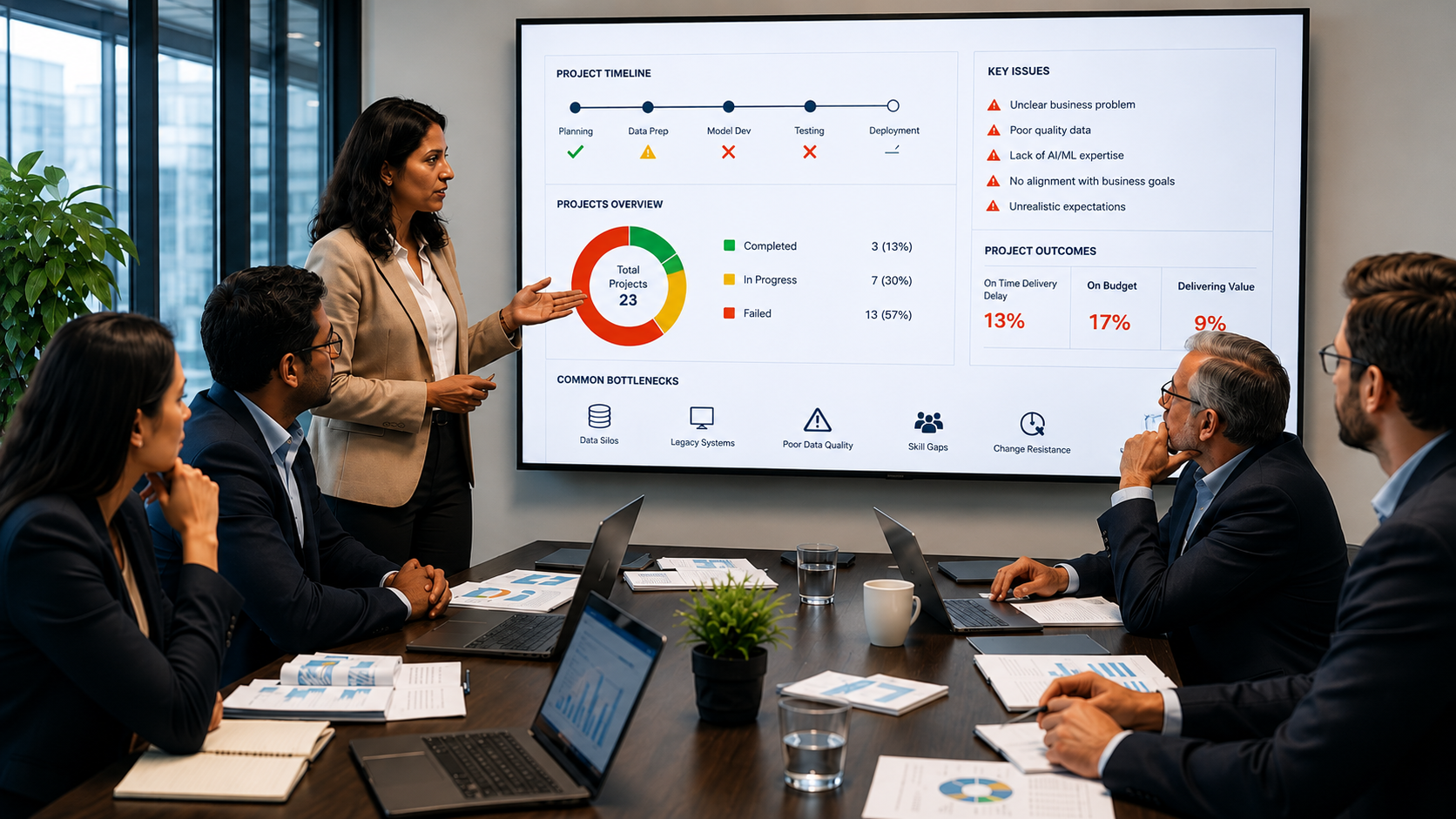
Include the costs that are easy to forget: model usage fees, integration work, monitoring, security reviews, change management and user training. Many AI projects fail because the budget covered the model but not the adoption.
For a deeper look at this problem, read Why AI Projects Fail Before They Deliver Value.
5. Make Cloud Spend Efficient, Not Just Bigger
Cloud budgets tend to grow quietly. In 2027, the smarter question is not how much to spend on cloud but how well it is being spent.
Build cost governance into the plan through resource tagging, rightsizing, reserved capacity and shutting down idle environments. Decide workload by workload what should move, what should stay and what should be re-architected.
Cloud-native design can improve scalability and resilience, but only where the business case supports it. A broader Cloud Transformation strategy helps enterprises move beyond basic infrastructure migration towards automation, application modernization and scalable cloud architecture.
Where legacy systems are a constraint, plan modernization in phases so operations are not disrupted.
6. Treat Security and Compliance as Built-In Costs
Security and compliance should sit inside every project budget, not in a separate line that gets cut first.
Regulations such as India's DPDP Act, GDPR and sector rules in BFSI and healthcare affect how data is stored, shared and used by AI systems. Fixing compliance after the technology is live is almost always more expensive than designing for it.
Enterprises should prioritize Data Governance & Compliance to establish security controls, data protection practices and regulatory readiness throughout the technology lifecycle.
This is the reasoning behind Why Compliance Cannot Be Added After the Technology Is Built.
7. Reserve Capacity for People, Skills and Contingency
Technology budgets often forget the people who deliver them. Plan for skill gaps in AI, data engineering and cloud operations, and decide where to train, hire or bring in a delivery partner or dedicated team.
Strong programme governance, such as a PMO, keeps spend tied to outcomes once work begins. Project & Program Management can help enterprises maintain structured execution, improve project visibility and manage delivery risks.
Finally, hold back a contingency reserve. Many teams use a rule of thumb of roughly 10 to 15 percent, adjusted to the risk level of the programme, so a surprise does not force you to cancel a priority project mid-year.
How Solvencia Helps Enterprises Plan and Deliver Technology Investments
A budget only creates value when it turns into delivery. Solvencia helps enterprises move from priorities to execution: assessing current systems and spend, shaping a prioritized roadmap across AI, cloud and data, building governed data platforms, modernizing legacy applications and keeping delivery on track with structured programme governance.
Through its capabilities in AI & Generative AI, Enterprise Analytics & Data, Cloud Transformation and Data Governance & Compliance, Solvencia helps enterprises turn technology investments into measurable business outcomes.
The aim is simple: every rupee, dollar or dirham of your 2027 IT budget should map to a measurable business result.
Conclusion
A strong 2027 IT budget is not the biggest one. It is the one tied most clearly to business outcomes. Start with outcomes, separate run from growth, fund data foundations before scaling AI, control cloud costs, build security in and keep a reserve for the unexpected.
If you want help turning these priorities into a practical roadmap, Solvencia can help you plan, prioritize and deliver. Explore Solvencia's enterprise technology solutions to discover how AI, cloud and data capabilities can support your organization's next stage of growth.
Frequently Asked Questions
There is no single correct figure. IT spend varies by industry, size and strategy, so the best starting point is last year's actual spend, split into run, grow and transform. Compare it with peers in your sector and with your growth goals, then decide how much of the run budget can be released for new priorities.
For most enterprises, the main priorities are data foundations, targeted AI use cases, cloud cost optimization, cybersecurity and compliance, legacy modernization and skills development. The right mix depends on your business outcomes and your current technology maturity.
Link each AI use case to a measurable outcome, such as hours saved, cost reduced or revenue protected. Propose a small pilot with defined success measures, then release further funding in stages. Include the full cost, covering integration, monitoring, security and training, so the business case is credible.
-
15+
Years of Experience
-
25+
Satisfied Clients
-
100%
Project Delivery Rate
-
100+
Skilled Professionals

Contact Info
+91-7416578822
info@solvencia.in

Visit our office
501 Vipras Elite, Door No: 1/90/7/B/79/22A Street No: 1, Patrika Nagar HITEC City, Hyderabad Telangana 500081