
Enterprise AI Agents: Use Cases, Risks and How to Get Started
Every enterprise has work that is repetitive, rule-heavy and spread across many tools: answering support tickets, reconciling invoices, screening applications, chasing approvals. Enterprise AI Agents are software systems that can understand a goal, plan the steps, use your business tools and complete tasks with limited human input, going well beyond a chatbot that only answers questions. Used well, they cut turnaround times and free people for higher-value work. Used carelessly, they create new security, accuracy and compliance problems. This guide explains where agents deliver value, which risks to manage and how to start with a plan that works.
1. What Enterprise AI Agents Actually Are
A traditional automation follows a fixed script. An AI agent is different: it uses a language model to interpret a goal, decide which steps to take, call tools such as your CRM, ERP or ticketing system, check the result and adjust. It can handle messy inputs like emails, documents and free-text requests. Some agents work alone on one task, while others work as a team, with one agent gathering data and another drafting or approving. The key point is that agents act, not just advise and that is where both the value and the risk come from.
2. High-Value Use Cases Across the Enterprise
The best early use cases share three traits high volume, clear rules and a measurable outcome. In customer service, agents resolve routine tickets, summarise cases and hand complex ones to people with full context. In finance, they match invoices, flag exceptions and prepare month-end reconciliations. In HR, they screen applications, schedule interviews and answer policy questions. In IT, they triage incidents and handle access requests. In software teams, they help with code review, test generation and documentation. In sales and operations, they update records, prepare briefs and monitor supply chain alerts. Pick the process where delay or manual effort costs you the most.
3. The Key Risks Enterprises Must Manage
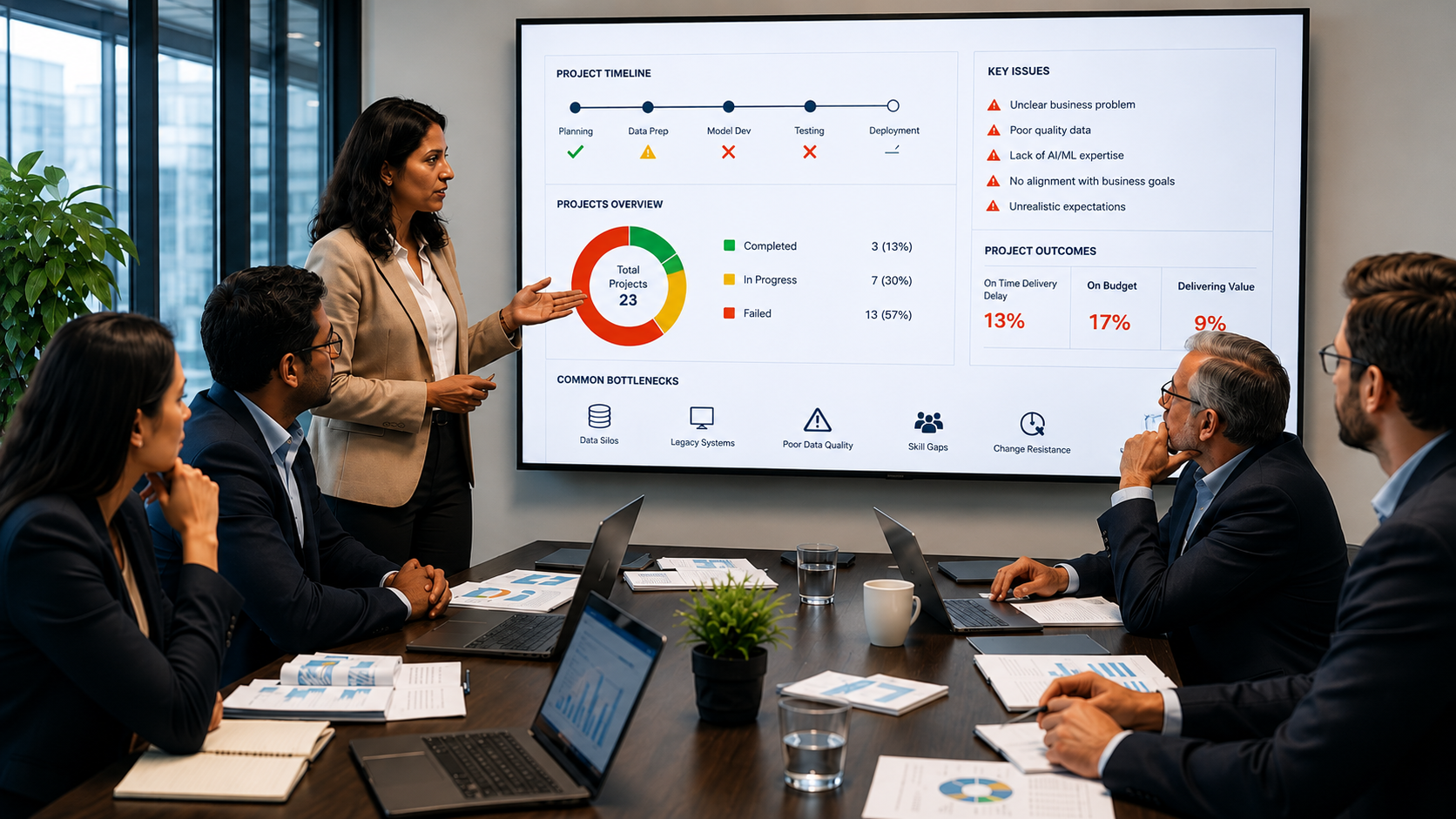
Agents bring risks that ordinary software does not. They can produce confident but wrong answers, known as hallucinations and then act on them. They can be tricked by malicious instructions hidden in emails or web pages, a risk called prompt injection. They may be given too much access, so one mistake touches many systems. They can expose sensitive or personal data and their decisions can be hard to explain to auditors. Costs can also grow quickly if agents loop or call tools without limits. Naming these risks early lets you design controls instead of reacting to incidents.
4. Governance, Security and Human Oversight
Strong controls make agents safe to scale. Give each agent the minimum access it needs, using its own identity and permissions. Keep a human in the loop for high-impact actions such as payments, deletions, contract changes and customer-facing decisions. Log every action and tool call so you can trace what happened and why. Set spending and rate limits and add guardrails that block unsafe actions. Define who owns each agent, who approves changes and how to switch an agent off quickly. Good AI governance should speed up adoption by building trust, not slow it down.
5. Data, Integration and Technical Readiness
An agent is only as good as the data and tools it can reach. Check that your data is accurate, current and well organised and that sensitive records are classified and protected. Agents need reliable APIs to your core systems, so legacy platforms with weak integration often become the first obstacle. Decide where agents will run, how they connect securely and how you will monitor them in production. Choose a model and platform approach that fits your security and data residency needs. Fixing these basics before launch prevents most failures later.
6. How to Get Started: A Practical Roadmap
Start small and learn fast. First, choose one process with clear volume, rules and a measurable goal. Second, map the current workflow and decide which steps the agent handles and which stay with people. Third, build a pilot with tight permissions and human approval on important actions. Fourth, test with real scenarios, including edge cases and adversarial inputs, before any live use. Fifth, measure results against a baseline, time saved, accuracy, cost per task and user satisfaction. Finally, expand step by step, giving agents more autonomy only as the evidence supports it.
7. Measuring Value and Scaling Responsibly
Set success metrics before the pilot begins, such as resolution time, error rate, cost per transaction and employee hours saved. Track quality continuously, because agent behaviour can drift as models, data and prompts change. Gather feedback from the people who work alongside the agent and use it to refine instructions and controls. Build reusable components like shared tool connectors, logging and approval workflows, so each new agent is faster and safer to launch. Prepare your teams too, with training on how to supervise agents and when to step in.
How Solvencia Helps You Adopt Enterprise AI Agents
Solvencia helps enterprises move from AI curiosity to working solutions. Our teams support use case selection, agent design, secure integration with your existing systems and testing for accuracy, safety and reliability. We work alongside your business, security and engineering teams on cloud-native and integrated platforms, where agents must connect to many systems and data sources. Whether you are planning a first pilot or scaling agents across departments, we help you build with the right guardrails from day one.
Conclusion
Enterprise AI agents are not a shortcut or a passing trend; they are a new way of getting work done and they reward organisations that approach them with discipline. By choosing the right use cases, managing risk, keeping people in control and measuring results, enterprises can capture real value without losing trust. Solvencia helps organisations turn AI agent ideas into safe, measurable and scalable business outcomes. If your team is considering agents, start with one focused pilot now, so you learn what works before your competitors do.
Frequently Asked Questions
Enterprise AI agents are AI-powered systems that can understand a goal, plan steps, use business tools and complete tasks with limited human supervision. They go beyond chatbots by taking actions in your systems.
A chatbot mainly answers questions in conversation, while an AI agent can also take actions, such as updating records, sending requests or running workflows, to complete a task.
The main risks include incorrect outputs, prompt injection attacks, excessive system access, data leakage, limited explainability and uncontrolled costs. Strong governance and human oversight reduce these risks.
-
15+
Years of Experience
-
25+
Satisfied Clients
-
100%
Project Delivery Rate
-
100+
Skilled Professionals

Contact Info
+91-7416578822
info@solvencia.in

Visit our office
501 Vipras Elite, Door No: 1/90/7/B/79/22A Street No: 1, Patrika Nagar HITEC City, Hyderabad Telangana 500081