
Cloud Transformation: Moving Beyond Infrastructure
For years, going to the cloud simply meant moving servers, applications and storage out of a data center and onto someone else's hardware. That's cloud migration and it's still a valuable first step. But for most enterprises today, migration alone isn't enough to stay competitive.
Cloud transformation is different. It's not about where your workloads run , it's about how your business operates once they get there. It combines cloud native architecture, automation, AI, analytics and modern security practices into a technology environment that keeps adapting as the business changes around it. Organizations pursuing this shift need a Cloud Transformation strategy built around business outcomes, not just infrastructure , one that treats modernization as an ongoing capability rather than a one time project.
Migration Gets You to the Cloud. Transformation Gets You Value From It.
Think of a mid-sized logistics company that migrated its route planning application by lifting it from an on-premises server and dropping it onto a cloud virtual machine. The infrastructure moved. The application still ran on the same monolithic codebase, still required manual deployments and still couldn't scale during peak shipping season without someone provisioning more servers by hand.
A transformation approach looks different. The same company breaks that application into microservices, automates deployment through CI/CD pipelines and connects it to a cloud-native data platform that feeds real-time traffic and weather data into route calculations. Now the system scales automatically during Black Friday week, ships new features weekly instead of quarterly and gets smarter with every trip it plans.
Same starting point. Very different outcome. That's the gap between migration and transformation and it's why McKinsey and other industry researchers have repeatedly found that organizations pursuing broader digital and cloud transformation initiatives report meaningfully higher returns than those that stop at basic infrastructure migration.
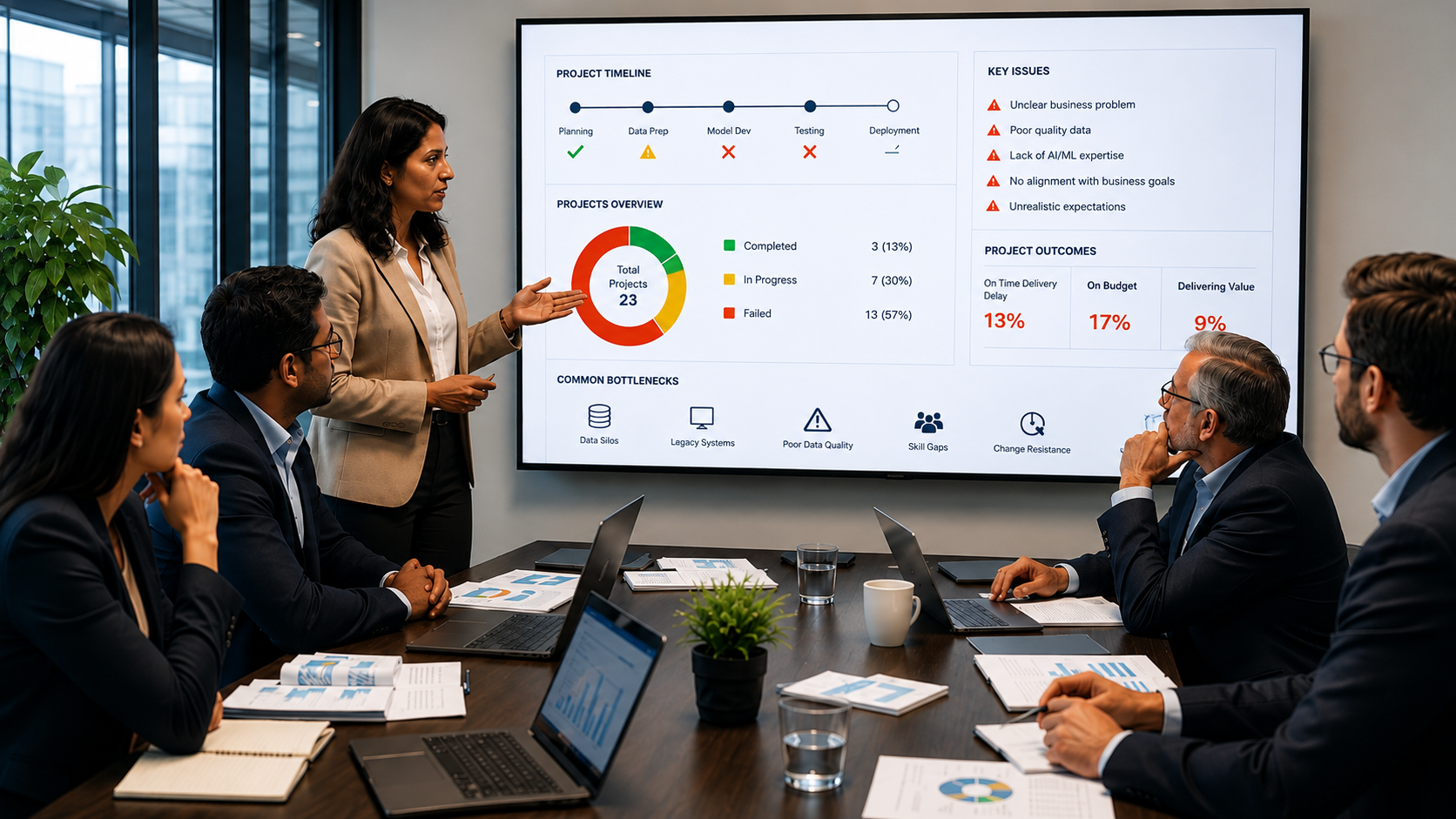
What Cloud Transformation Actually Includes
Cloud transformation is best understood as a bundle of interconnected shifts, not a single project:
- Application modernization , refactoring legacy monoliths into microservices and containers
- DevOps and CI/CD automation , shortening the gap between writing code and shipping it
- Infrastructure as Code (IaC) , provisioning and configuring environments through version controlled templates instead of manual clicks
- Data modernization , building platforms that support real-time analytics and AI, not just static reporting
- AI and machine learning integration, embedding intelligence into operations, not bolting it on afterward
- Cloud security and identity management , designing for zero-trust from day one
- Hybrid and multi-cloud strategy avoiding single-vendor lock-in while keeping systems interoperable
None of these individually defines transformation. It's the combination , applied with a clear business goal , that separates a modernized digital enterprise from a company that just changed its hosting bill.
Why It Matters More Than the Infrastructure Layer
Business agility. When deployment cycles shrink from weeks to hours, teams can respond to market shifts instead of just reacting to them months later.
Elastic scale. Cloud-native systems expand and contract with real demand, so businesses stop overpaying for idle capacity or scrambling during traffic spikes.
Faster innovation. A modern data and API layer means new features, AI capabilities and integrations can be tested and launched without rebuilding core systems from scratch.
Better customer experience. Faster, more reliable, more personalized digital touchpoints are a direct byproduct of modern architecture , not a separate initiative layered on top.
Stronger resilience. Automated monitoring, encryption and identity controls reduce both security risk and operational downtime, which matters as much to the board as it does to IT.
A Practical Roadmap
1. Start with business outcomes, not technology. We want to adopt Kubernetes as a strategy. We want to cut release cycles from six weeks to three days.
2. Assess before you modernize. Not every application deserves the same treatment. Some should be rehosted as is, some replatformed, some fully refactored and some retired outright. Applying one strategy to every workload is a common and costly mistake.
3. Modernize incrementally. Cloud native rewrites don't need to happen all at once. Strangling a monolith piece by piece into microservices reduces risk compared to a single high stakes cutover.
4. Automate as you go. Every manual deployment step you carry forward into the cloud is technical debt you're paying interest on. Build CI/CD and IaC into the transformation itself, not as a follow up project.
5. Treat data as a product. Modern analytics and AI depend on clean, accessible, well governed data. Transformation efforts that skip data modernization tend to bottleneck exactly where they promised the most value.
6. Bake in security from the start. Retrofitting identity management and zero trust controls after the fact is far more expensive than designing for them upfront.
7. Keep optimizing. Cloud transformation isn't a project with an end date , it's an operating model. Costs, performance and security posture all need continuous tuning as usage patterns evolve.
Mistakes That Quietly Derail Transformation
Even well-funded initiatives stumble over the same issues repeatedly:
- Treating transformation as a bigger version of migration
- Lifting and shifting poorly designed legacy applications without modernizing them
- Adopting new technology because it's trendy, not because it solves a defined problem
- Underestimating the compliance and security work required at scale
- Skipping internal skills development and relying entirely on vendors
- Ignoring cost governance until the cloud bill becomes a board-level concern Locking into a single vendor's ecosystem without an exit strategy
Most of these aren't technology failures , they're planning failures. A clear roadmap, realistic sequencing and defined ownership solve more transformation problems than any single tool does.
Conclusion
Cloud transformation isn't about escaping the data center , it's about building a technology foundation that keeps improving after the move is done. Organizations that treat it as an ongoing capability, not a one-time migration checkbox, are the ones that come out ahead, shipping faster, scaling smarter and adapting to whatever the next disruption turns out to be.
The goal was never to simply be in the cloud. It's to build an organization that can keep changing without starting over every time.
Solvencia helps enterprises design and execute cloud transformation strategies that go beyond migration, modernizing applications, automating operations and building the technology foundation for continuous, long-term growth.
Frequently Asked Questions
Migration moves existing workloads to cloud infrastructure with minimal changes to how they work. Transformation changes the applications, processes and operating model themselves , through automation, modern architecture and data-driven capabilities , to unlock new business value rather than just new hosting.
No. Most successful transformations assess each application individually and apply the right approach , rehost, replatform, refactor, replace, or retire , rather than forcing every workload through the same process on the same timeline.
There's no fixed timeline, because transformation isn't a single project with an end date , it's an ongoing operating model. Most organizations see meaningful early wins within 6-12 months on priority workloads, while broader modernization continues in phases over several years.
No. Mid-sized and even smaller organizations benefit from automation, elastic scaling and modern data practices , often more urgently, since they typically have less tolerance for wasted infrastructure spend or slow release cycles.
-
15+
Years of Experience
-
25+
Satisfied Clients
-
100%
Project Delivery Rate
-
100+
Skilled Professionals

Contact Info
+91-7416578822
info@solvencia.in

Visit our office
501 Vipras Elite, Door No: 1/90/7/B/79/22A Street No: 1, Patrika Nagar HITEC City, Hyderabad Telangana 500081